Concrete Leveling checklist: cracks, dips, slopes, and drainage issues
Change Your Home: The Ultimate Guide to Concrete Leveling for a Perfect End up
Concrete surfaces can wear away with time, leading to unevenness that influences both safety and looks. Home owners may discover fractures, dips, or inclines that compromise capability. Comprehending the causes and signs of these issues is necessary. Different methods exist for leveling concrete, each with its very own set of materials and methods. Polyjacking Des Moines. When to tackle the task on your own or call in an expert can make all the difference, recognizing. The journey to a perfect surface begins here
Comprehending the Reasons of Unequal Concrete Surfaces
Concrete is renowned for its sturdiness, numerous variables can lead to unequal surfaces over time. One key reason is soil motion, which may arise from variations in dampness levels or bad compaction during installation. As the ground changes, it can produce spaces below the concrete, bring about resolving. Additionally, freeze-thaw cycles can exacerbate this issue, as water trapped within cracks broadens when frozen, triggering additional surface area disruption. Hefty tons and vibrations from lorries or machinery can also add to surface area irregularities. Inappropriate drain can result in water merging and disintegration, threatening the concrete's integrity. Ultimately, recognizing these causes is important for home owners looking to maintain their concrete surfaces and assure long-lasting stability.
Indications That Your Concrete Needs Leveling
Identifying the indications that concrete demands leveling is vital for maintaining the stability of surfaces affected by underlying concerns. Home owners should be attentive for visible fractures in the concrete, as these might suggest settling or changing. In addition, the visibility of uneven surfaces or obvious dips can cause hazardous stumbling risks. Water merging in specific locations throughout rainfall can also signal inappropriate slope and drain problems. Other warning indicators consist of trouble opening windows or doors, which may come to be misaligned as a result of concrete shifts. If the garage floor shows up uneven or if there are voids in between the concrete and adjacent structures, it's necessary to review professional analysis to deal with these possible troubles promptly.
Different Methods of Concrete Leveling
Concrete leveling can be accomplished via different techniques, each with its very own benefits. Mudjacking and polyjacking are 2 prominent methods that vary in their materials and application processes. Additionally, self-leveling compounds provide an uncomplicated remedy for small imperfections in concrete surface areas.
Polyjacking vs. mudjacking
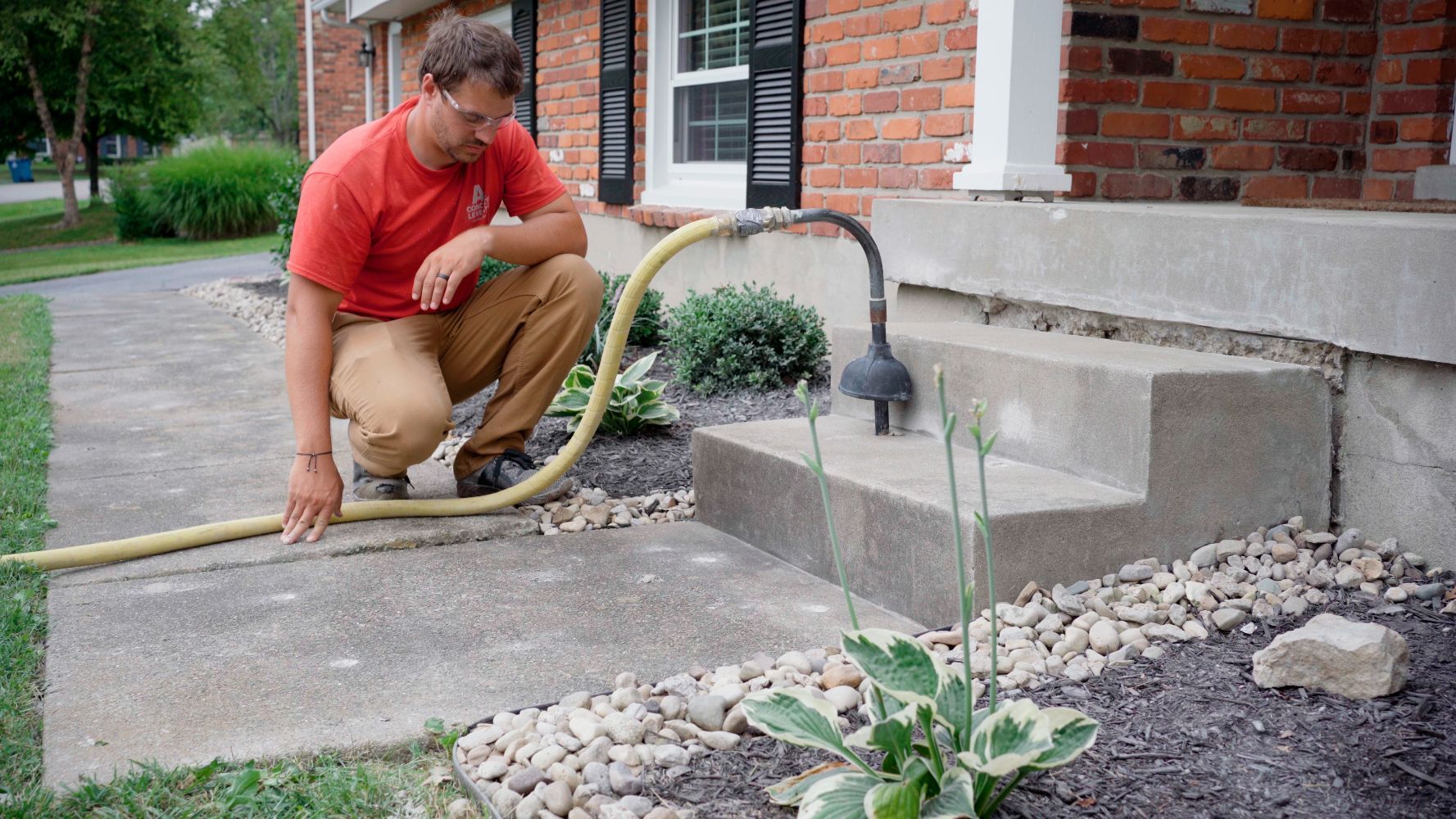
Often, home owners encounter the obstacle of uneven concrete surface areas, prompting them to ponder efficient leveling approaches. 2 preferred techniques are mudjacking and polyjacking. Mudjacking involves injecting a cement-based blend under the piece to increase it, making it a tried and true, cost-effective option. It can be hefty and might take longer to completely dry. Alternatively, polyjacking utilizes polyurethane foam, which is lighter and expands upon shot, supplying a more reliable lift. This technique cures quickly, reducing downtime and interruption. While mudjacking might be appropriate for larger jobs, polyjacking is usually favored for its speed and decreased weight. Ultimately, the choice in between these methods depends upon details task requirements, budget factors to consider, and the preferred longevity of the repair work.
Self-Leveling Substances Explained
A variety of self-leveling substances are offered to attend to unequal concrete surfaces, offering property owners with reliable solutions for achieving a smooth coating. These compounds are normally made from a mix of concrete, polymers, and aggregates, permitting very easy application and quick healing. When put onto the surface area, they resolve and flow into low spots, developing a degree airplane.
Materials Utilized in Concrete Leveling
Efficient concrete leveling relies upon a variety of specialized products designed to enhance stability and toughness. Among these, self-leveling compounds are frequently utilized, supplying a smooth surface area by filling up low areas and developing an even surface. Additionally, polymer-modified mortars use enhanced adhesion and versatility, making them suitable for different substratums. Foam and mud jacking products, such as polyurethane, are commonly used for increasing settled concrete pieces, making certain long-lasting assistance. Fracture fillers and sealants play a vital duty in attending to surface area imperfections and avoiding future damages. Lastly, reinforcements like steel rebar or cord mesh can be integrated to bolster architectural stability. With each other, these materials add to effective and efficient concrete leveling services.
DIY Concrete Leveling: Step-by-Step Guide
In the domain name of do it yourself concrete leveling, comprehending the required tools is crucial for a successful job. The procedure involves a clear step-by-step application that assures a smooth and even surface area. This guide will certainly detail both the crucial devices and the organized technique needed for effective concrete leveling.
Tools Required for Leveling

Step-by-Step Application Process
An effective concrete leveling job includes a number of clear and systematic steps that assure a well balanced surface. The area should be extensively cleaned up to remove any kind of debris or loosened material. Next, any kind of considerable fractures need to be repaired to identify a smooth base. After preparing the surface area, the leveling substance is blended according to the supplier's directions. The blend is then put onto the unequal areas, starting from the least expensive point. Utilizing a leveling or a trowel tool, the substance is spread out equally over the surface area. When applied, it is vital to allow sufficient drying time as specified in the standards. Ultimately, the newly leveled surface can be do with paint or sealer for added protection and aesthetic appeals.
When to Hire a Specialist
Concrete leveling can be an intricate job that commonly needs a specialist's knowledge. Homeowners ought to think about hiring an expert when the concrete problems are extensive, such as significant fractures, huge sunken locations, or when the concrete spans a big surface area. In addition, if the project includes specialized devices or materials, a specialist's experience can assure correct application and safety and security. Those lacking the moment or knowledge to implement the leveling procedure successfully might likewise take advantage of specialist help. If the job needs adherence to neighborhood structure codes or authorizations, specialists can navigate these regulations with convenience. Eventually, spending in a specialist can save time, reduce stress, and lead to an extra sturdy, premium coating.
Maintaining Your Concrete After Leveling
Correct maintenance of leveled concrete is vital to assure its longevity and longevity. After leveling, it is important to enable the concrete to heal appropriately, commonly for at the very least 28 days, to accomplish peak stamina. Regular cleansing is suggested; using a broom or a pressure washing machine can get rid of particles and prevent discoloration. Furthermore, using a sealer every couple of years assists protect against wetness and chemicals that can cause damage. Property owners ought to additionally examine for splits or disproportion periodically, as early detection can prevent further problems. Lastly, staying clear of heavy tons or sharp impacts on the surface will help preserve its stability, making sure that the leveled concrete continues to be a stunning and useful part of the home for years to find.
Frequently Asked Inquiries
How Lengthy Does Concrete Leveling Last Before Needing Re-Treatment?
Concrete leveling usually lasts in between 5 to one decade, depending on variables such as weather problems, use, and the high quality of materials used. Routine upkeep can extend its lifespan and preserve a smooth surface area.
Can I Walk on the Leveled Surface Area Instantly After Therapy?
Right away after therapy, it is typically recommended not to walk on the leveled surface area - Concrete Leveling. Allowing ample healing time assurances excellent outcomes and stops damage, typically suggested to wait at the very least 24 hr prior to any kind of foot web traffic
What Is the Price Variety for Specialist Concrete Leveling Services?
The price array for expert concrete leveling solutions generally drops between $3 and $25 per square foot, relying on variables such as the extent of leveling called for, the technique made use of, and local prices distinctions.
Is Concrete Leveling Safe for Youngsters and pets?
Concrete leveling is typically secure for pet dogs and kids once the location has fully treated. Nonetheless, it's a good idea to maintain them away throughout the leveling procedure to stop crashes and guarantee a smooth, hazard-free atmosphere afterward

Does Climate Impact the Concrete Leveling Process?
Yes, climate substantially influences the concrete leveling process. Extreme temperature levels, moisture, and precipitation can influence treating times and the high quality of the ended up surface, making it vital to think about weather before starting the project.
Recognizing the signs that concrete requirements leveling is important for preserving the stability of surfaces influenced by underlying problems. Regularly, home owners encounter the challenge of unequal concrete surface areas, triggering them to consider effective leveling techniques. Concrete Leveling Des Moines. When undertaking concrete leveling, having the right tools is necessary for achieving a smooth and also surface area. Concrete Leveling Des Moines An effective concrete leveling job includes numerous clear and systematic steps that assure a balanced surface area. Property owners must think about working with an expert when the concrete issues are extensive, such as significant fractures, huge sunken locations, or when the concrete periods a huge surface area